Posts

Showing posts with the label science

On the passion of love - Blaise Pascal


In this short treaty, Blaise Pascal - who for the most part of his life worked as a scientist - expounds his views about love and passion. He tries to point out the relation of these feelings with all the other aspects of life.

Einstein's dreams - Alan Lightman


There have always been speculations about Albert Einstein getting his most inspired ideas while he was dreaming. Even though this has never been confirmed, it is true that our brain develops new connections providing insightful ideas during REM sleep, precisely when we are dreaming. Those of you who want to know more about what happens to our body and mind while we are comfortably slumbering on our beds can have a look at “Why we sleep”, a great popular science book written by Matthew Walker.
In “Einstein’s dreams” Alan Lightman, who is both a writer and a physicist, tries to figure out all the dreams that the famous Nobel prize winner could have had over the months preceding the publication of his revolutionary paper on relativity theory and specifically about the concept of time.

The World Until Yesterday - Jared Diamond


I’ve already said that Jared Diamond is one of my favorite authors and popular science writers. I don’t need to say it again, and by doing that I’ve basically said it again. No problem: he deserves it.
Diamond’s works are the ones I would have liked to read when I was at school. I think he also writes young readers editions. Some of his lessons would do great as schoolbook chapters.
He’s particularly skilled at explaining why, over the course of aeons, the world, the environment, living organisms and human societies have become (as opposed to have always been) what they are today.

SuperFreakonomics - Steven Levitt and Stephen J. Dubner


I’ve already talked about the first book of the series (Freakonomics) a few months back. In this new non fiction work the authors keep analyzing situations that apparently don’t have anything to do with economics, by using tools that are normally handled by economists.
The theme is still the same, only this time it is expanded, explained more in detail and displayed with new examples: human beings behave in response to incentives (positive or negative). Basically when we do or say something we are always trying to get some gain or avoid some loss, not necessarily tangible ones.

What the dog saw - Malcolm Gladwell


If you enjoyed Gladwell’s bestsellers such as “The tipping point”, “Blink” and “Outliers”, this collection of articles is a must read for you.
Malcolm Gladwell has worked as a columnist for “The New Yorker” since the mid nineties. Many of the articles he’s published in that paper posed as groundwork for some of his most famous non fiction books. “What the dog saw” is a collection of the best of those articles.

The mystery of Majorana (La scomparsa di Majorana) - Leonardo Sciascia


In this book the famous Sicilian novelist and essayist Leonardo Sciascia (pronounced Shasha) delves into the mystery of the talented theoretical physicist Ettore Majorana’s disappearance.
A member of the “Via Panisperna boys” - a group of scientists lead by Nobel prize laureate Enrico Fermi - Majorana was considered a rare genius (he was only in in early thirties when he disappeared and had already proven to be greatly more talented than many of his colleagues, in Italy and elsewhere). In the mid thirties the group, working at the Royal physics institute of the University of Rome La Sapienza, made important discoveries in the neutron energy field, which a decade later made the construction of the American atomic bomb possible. The same Fermi, an Italian Jewish, defected to America after receiving his award in Stockholm.

The God delusion - Richard Dawkins


You might be sincere and passionate about your religious faith and conviction, yet debating the topic with the likes of Richard Dawkins turns out to be a very difficult task. He not only is an evolution theory guru, he’s also skilled in philosophical arguments and seems to be very at ease debating religious matters with the most prominent theologians.
Dawkins admits that religion could well be regarded as an innocuous matter of personal choice, under some specific theoretical conditions. Unfortunately those conditions are not met in the real world: religions continuously put pressure on institutions that have a secular nature, interfere with the private preferences and lives of common people (both religious and non religious) and are at the bottom of countless conflicts worldwide. It’s been like that for centuries. Sometimes those conflicts are actually about something entirely different - land control, natural and financial resources, political power - it’s true, but without religions you wouldn’t be able to separate the various factions in the first place. And if you didn’t have the conflicting factions, you wouldn’t probably have the conflicts at all.

A short history of nearly everything - Bill Bryson


This is the kind of science book I would have liked to read when I was a high school student.
Bill Bryson, the famous travel writer, one day realized that he didn’t have an answer for even the most basic questions about why the world is the way it is and works the way it does. Therefore he embarked on a journey through articles, books and interviews that helped him shed some light on many of nature’s supposed mysteries.

Life, the universe and everything - Douglas Adams


I was looking for the most famous book by the same author - The hitchhiker’s guide to the galaxy - and as I didn’t find it I left with this one instead, to see what it is about.
It’s a comic science fiction novel. I had already read some science fiction books before, even though it’s not my favorite genre, but never one of the “comic” variant. I didn’t even know it existed as a category, actually.

David and Goliath - Malcolm Gladwell


The question and wonder that has become a metaphor: “How did David manage to achieve such an improbable feat as beating Goliath?”.
The answer, as Malcolm Gladwell suggests, can be found in another question: why do we suppose that David is the weaker party, the underdog, the likely loser?” Maybe we haven’t assessed the situation well enough.

Why we sleep - Matthew Walker


This book is super interesting. People who like to sleep a lot will love it and those who are sleep-deprived or, even worse, boast about being able to carry a healthy and active life with only a few hours of slumber each night, well…they definitely need to read it.
Matthew Walker, a real guru on the subject, starts by explaining what sleep is, how it works and how it evolved over the aeons. You’ll get to know about sleep phases (NREM, REM, etc.), circadian rhythm, fundamental chemical reactions, how different animal species sleep and the various changes across the life span.

The uninhabitable earth - David Wallace-Wells


This book about climate change - global warming in particular - is a tough one. Both because it’s not an easy read - especially the first part, so full of technical details, facts and figures, many, many of them - and because it’s a very alarmist text: the worst case scenario that it depicts is a grim one. And even if you take into account the base case scenario, well, it’s not a merry one either. Basically, we might be doomed. Damage has already been done, and that will hardly be fixed in the near future. Even worse, more damage is being added by the year, at a considerable speed. We might just have a few decades to reverse the tide before it’s too late, and judging by the global level of commitment and coordination, that could turn out to be an extremely long shot.

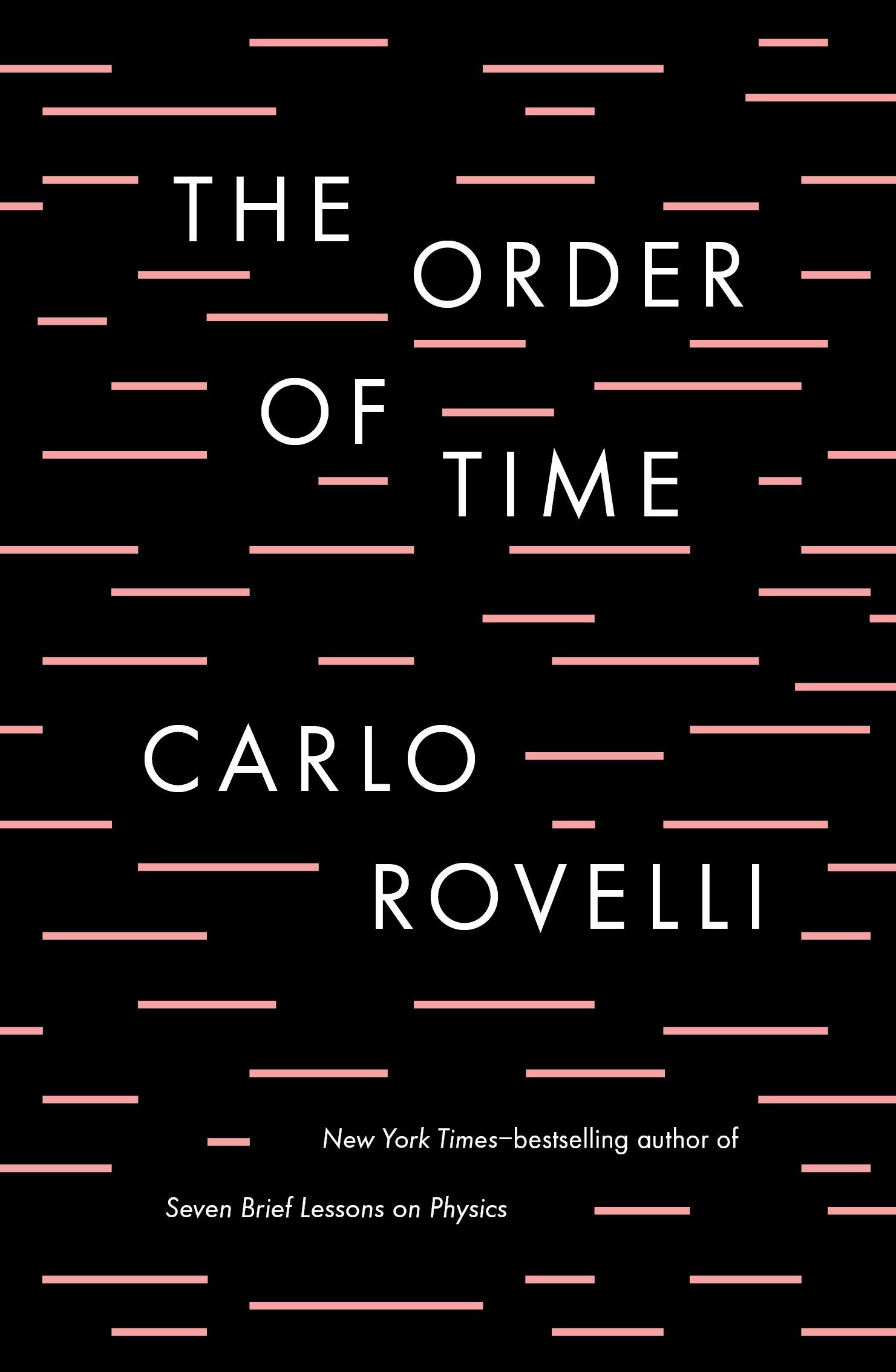
The order of time (L'ordine del tempo), Seven brief lessons on physics (Sette brevi lezioni di fisica) - Carlo Rovelli


My reading list is back. It won't be called "Pandemic reading list" anymore though.
I’ve already introduced Carlo Rovelli when I talked about my theme-based parallel reading experiments (Rovelli's Helgoland along with The Tao of physics and The way of Zen).
“The order of time” is a sort of return trip to "Time city": we could call it “time traveling”, even though it’s not exactly what we mean by that expression. 

The grand design - Stephen Hawking & Leonard Mlodinow


Pandemic book list, 21st item. This might well be the last one. I’ll keep reading, of course, but I hope I won’t update a pandemic-related list anymore.
I remember Stephen Hawking's appearance on the TV show “The Big Bang theory”: he was witty, self-ironic, clever, opinionated and self-confident. He totally SheldonCoopered Sheldon Cooper himself!

Helgoland - Carlo Rovelli, The way of Zen - Alan W. Watts, The Tao of physics - Fritjof Capra


Theme based parallel reading.
I’ve already tried parallel reading before: I used to switch between novels and non fiction, or poetry and prose. This time I went a step further: I chose three books based on a common theme.

Enlightenment now - Steven Pinker


A good thing about the current pandemic is that I’ve had plenty of time to read. I'm currently updating a list of the best books I’ve come across so far. Please see my home page for the previous entries.
This 15th item reminds me of Hans Rosling’s “Factfulness”, a book that we saw together a few weeks ago. The topics and the goals are similar, even though the former is somehow more challenging and philosophical than the latter.

Outliers - Malcolm Gladwell


Have you always thought, like myself, that in order to excel in any one field you must be wonderfully talented, extremely skilled and very persevering? Well, it’s true, you need all that, but unfortunately it’s not gonna be enough. What else, then? That’s what this book is about.
We already know that Malcolm Gladwell’s trick to writing a good book is…examples, examples, examples! Very revelatory examples. And here are a few good ones.