Posts

Showing posts with the label India

Ibis trilogy (Sea of Poppies, River of smoke, Flood of fire) - Amitav Gosh


I first read a book by Amitav Gosh more than twenty years ago, during my first trip to Myanmar, when two Italian ladies on a boat ride along the Irrawaddy river gave me a copy of a short story collection by this Indian master. A few years later I got to admire his talent after reading "The glass palace" and since then I've read anything by him I've happened to come across.

The enchantress of Florence - Salman Rushdie


This is not the first book by Salman Rushdie that I read. He somehow reminds me of Umberto Eco: impressive historical references, wonderful command of the language and astonishing creativity.
The main locations of the novel are Mughal Hindustan and Florence, Italy; many chapters, though, are based in between those two places: Uzbekistan, Persia and the Ottoman Empire above all.

The city of Joy - Dominique Lapierre


Back in the seventies Father Stephan Kovalski, a French-Polish priest, arrives to one of the most infamous of the Indian slums: Calcutta’s “Anand Agar”, also known as the “City of Joy”. Being driven by a fervent faith and an equally ardent desire to help those in need, he definitely landed in the right place: notwithstanding its name, the slum is one of the poorest, dirtiest and socially problematic neighborhoods in India and probably in the whole world. As a western Roman Catholic priest in a slum full of poor Indian Hindus, Muslims and a few Christians, at first Kovalski is looked upon with skepticism. Yet through his willingness to share the same harsh conditions of his neighbors and help them, he slowly manages to win their trust. Towards the end of the book a rich, young and equally committed American doctor - Max Loeb - will join Kowalski’s group of volunteers.

The namesake - Jhumpa Lahiri


We’ve already met this outstanding Indian-American female writer when we talked about her debut work: the short-story collection “The interpreter of maladies”.
“The namesake” is a novel that deals with the life of an American born Indian guy, who is named Gogol, after the great Russian author, for reasons related to his father’s past.

Alexander, trilogy (1. Child of a dream, 2. The sands of Ammon, 3. The ends of the earth) - Valerio Massimo Manfredi


This trilogy is about the life of Alexander the Great - son of Philip II, king of Macedonia - who became the chief of the largest empire of the world when he was just 30.
Alexander spent the first years of his life in Macedonia, trained by his father’s officers and the great Greek philosopher Aristotle. He then joined his father’s army as the commander of the cavalry special corps. After his father’s death he was crowned king and promptly started a military campaign that would first lead him to control the whole of the Ancient Greek world, and eventually the Persian empire, including Egypt, Central Asia and the western part of the Indian subcontinent.

SuperFreakonomics - Steven Levitt and Stephen J. Dubner


I’ve already talked about the first book of the series (Freakonomics) a few months back. In this new non fiction work the authors keep analyzing situations that apparently don’t have anything to do with economics, by using tools that are normally handled by economists.
The theme is still the same, only this time it is expanded, explained more in detail and displayed with new examples: human beings behave in response to incentives (positive or negative). Basically when we do or say something we are always trying to get some gain or avoid some loss, not necessarily tangible ones.

The inheritance of loss - Kiran Desai

Yet another Indian novel. This one is based in West Bengal. Not in Calcutta or anywhere near the sea though, but up north, in Kalimpong district, deep into the Himalayan mountainous region, where many ethnic minorities live.
It’s the mid 80s, the Gorkhaland movement insurgency for Nepali independence is underway and the life of Sai - a westernised orphaned Indian girl who lives with her grandfather (a retired judge), his cook and his pet dog - is shaken by the gruesome events and the ambiguous behaviour of his tutor/lover.
Meanwhile in Manhattan, Biju -  the son of the aforementioned cook - lives and works as an illegal immigrant constantly dreaming to be granted a green card.

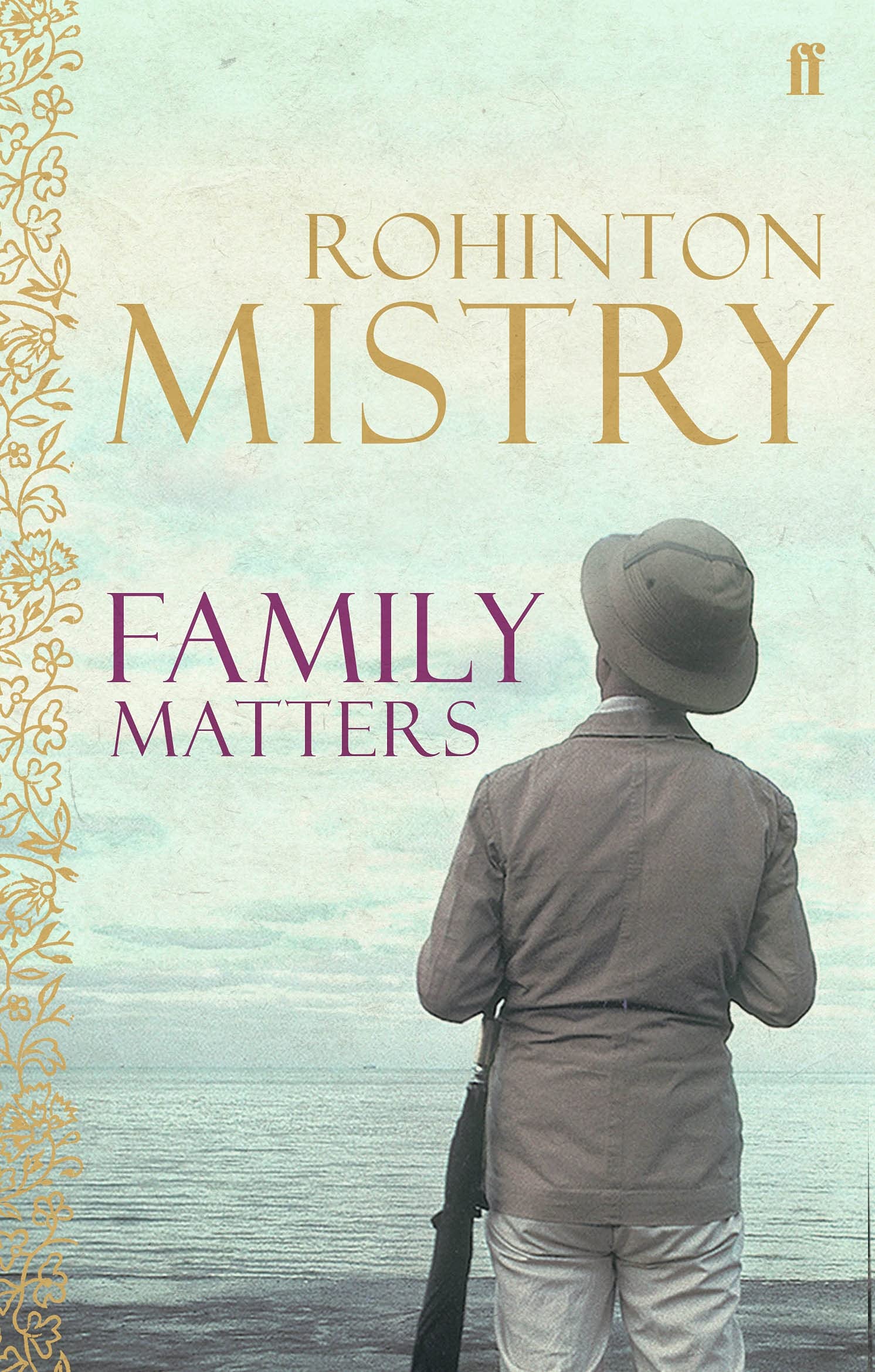
Family matters - Rohinton Mistry


When I read Rohinton Mistry’s “A fine balance”, a few years ago, I thought that it was a beautiful story about Indian castes and politics (the story is based at the time of The Emergency and the sterilization campaigns of the ’70s), but I didn’t like the writing style at all.
I found “Family matters” a much better written novel. A little less interesting from the historical and political point of view, this book delves into the lives of a family belonging to the Bombay’s Parsi community. Mistry, being a Bombay Zoroastrian himself, is very detailed about the description of the community customs and traditions. I did like that aspect a lot.

Interpreter of maladies - Jhumpa Lahiri


This is a collection of stories. The recurring theme is that of Indians living in the west, or Indians visiting or living in India as foreigners. The author is an American woman of Indian descent herself, so she is familiar with most of the situations depicted in her stories. I am both interested in good Indian literature (or literature about India) and short stories, and I definitely enjoyed reading this book.

The scent of India (L'odore dell'India) - Pierpaolo Pasolini


In 1961, Pierpaolo Pasolini - Italian poet, novelist, journalist and film director - joined colleague authors Alberto Moravia and Elsa Morante on a month-long trip to India.
The entries in this travel diary mostly reflect the author’s reactions to the situations he’s experiencing in terms of feelings and sensations - and some cultural/religious interpretation - rather than being cool headed rational, sociological and political explanations of them. India comes out as a barren, dirty and bad smelling pile of shaky buildings, open-air sewers, busy roads and temples, populated by a vast majority of multi-religious, ragged, placid, kind and sweet people, and a still new, stunned and unprepared well-off minority, whose only human strengths are their webs of family ties.

Five past midnight in Bhopal - Dominique Lapierre & Javier Moro


I’d already read a couple of books by the French author Dominique Lapierre. I particularly liked “Freedom at midnight” about India and Pakistan independence and partition, which I read when I was traveling in the subcontinent. “O Jerusalem”, about the birth of the State of Israel and the first dramatic days of war between the Jewish state and its neighboring Arab countries, is also a very good one.
“Five past midnight in Bhopal” takes us back to India, a country that the author knows well. Lapierre often collaborates with some colleague when writing non fictional works. He wrote the aforementioned books together with the American journalist Larry Collins and this one with Javier Moro from Spain.
Bhopal is for chemical accidents what Chernobyl is for nuclear ones.

The algebra of infinite justice - Arundhati Roy


I read Arundhati Roy’s bestselling debut novel “The God of small things” many years ago. It’s a fantastic story about castes, power, exploitation, love and violence. “The algebra of infinite justice”, on the other hand, is a non-fiction book: a collection of essays and articles that Arundhati wrote between 1998 (the year Pakistan and India tested their newly developed nuclear weapons) and 2002, one year into the war on terror waged by the US and their allies after 9/11, when talks about attacking Iraq after Afghanistan were mounting.
The themes of the book are pretty much the same as the ones of the novel, but on a much wider scale.

Itamil (it's not a medicine) - Bangkok, Thailand

One night in Bangkok I meet D. If you close your eyes and listen to him you know right away where he comes from. "I was born in Reggio but I'm a Bolognese." Short, slim, with waiving black hair. Under his dark skin there runs Tamil blood, his Indian features are of a southern variant. After having said to me that he is from Bologna he tells some English guys that he's not Italian. "If you have an Italian parent or you were adopted, being granted the citizenship is not that hard. But if your family is from somewhere else it might almost be impossible. D. is nice, self-confident, he studied in Italy and Australia, he's enterprising and smart, a precious human resource. He eats bolognese and tortellini with his Italian friends and he feels quite awkward at a Tamil meal. I'm amazed and bewildered, I can't get it out of my mind, a fraction of guilt is lying in my stomach. I think of the debate about granting citizenship to immigrants. What are they talking about, and with what credibility? In Italy there are thousands of people like D.

Photo of an Italian passport of 1901 (PD), from wikipedia.org

Your bag is open - New Delhi, India

(Spring 2003)
I need a new passport, the old one is gone: no more pages left, stamped off in few years, with Asian touches of red and blue ink, a South American opening and Australian stickers. First thing that I need are two passport photos and I'm going to get them at Connaught place. "Don't listen to anybody when you walk in that area, the place is full of swindlers and touts" people have told me again and again. I'm walking on the sidewalk, with steady pace. I sense that somebody is following me. "Sir...Sir...excuse me, Sir...Sir...Sir...your bag is open..." I follow the advice and pretend I don't hear him. "Sir...wait...you're bag is open!" I'm deaf, I'm an idiot, I can't speak English, whatever it is, I'm not going to reply. "Sir...SIIIRRR! YOU'RE BAG IS OPEN!" I walk, walk, keep walking, non-stop. "SIR! SIR!" Still no reaction. "SIR! SIR! FUCK YOU MAN!" He finally quits and fades away. I arrive at the shop and reach for the bag...fuck you man, it was open indeed!"

Image "Boston terrier puppy inside a bag" by Fogstock Llc, from AllPosters.com